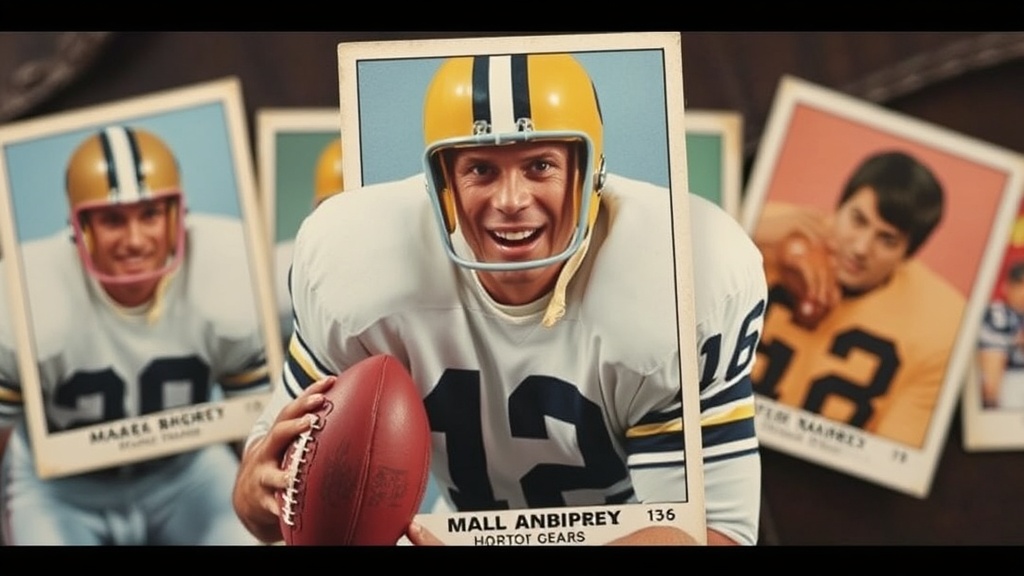
6 Rare Vintage Football Card Sets That Defined Eras

The 1950s Era Foundations
The 1970s Expansion Boom
The 1980s Glossy Revolution
The 1990s High-End Era
The Modern Tech-Driven Era
The Special Edition Collector Sets
The scent of old cardboard and the tactile snap of a fresh wax pack defines the vintage collecting experience. This post examines six specific football card sets that fundamentally changed how collectors view the hobby, from the early days of gum-based cards to the high-end era of premium inserts. These sets aren't just pieces of paper; they are the pillars of football history.
Why are vintage football cards so valuable today?
Vintage football cards hold value because of their scarcity, historical significance, and the sheer number of collectors chasing iconic Hall of Fame rookies. When you look at a set from the 1950s, you aren't just looking at a card—you're looking at a piece of Americana. The supply of high-grade specimens is dwindling every year as collectors hold onto their best pieces.
The market for these cards is driven by the "Gold Standard" of grading. Companies like PSA have set the standard for how we verify authenticity and condition. Without that third-party verification, the market for vintage cards would be a much more chaotic place. It's a bit of a wild west out there if you aren't careful.
If you want to understand the different tiers of value, look at this breakdown of how sets generally rank in the current market:
| Era | Primary Driver | Typical Collector Profile |
|---|---|---|
| Pre-1960s (Golden Age) | Extreme Rarity | High-end investors and museum-grade collectors |
| 1960s - 1970s (Expansion) | Iconic Hall of Fame Rookies | Nostalgic collectors and mid-tier investors |
| 1980s - 1990s (Modern/Junk Wax) | Nostalgia and High-End Inserts | Casual collectors and "spec" hunters |
The 1952 Topps Set: The King of Football?
The 1952 Topps football set is widely considered the most important way to start a vintage collection due to its cultural impact. While the 1952 baseball set gets more mainstream attention, the football version is the bedrock of the hobby. It features legendary names and that classic, vibrant design that screams mid-century Americana.
Finding a high-grade 1952 Topps card is a massive undertaking. Most of these cards were handled by kids in the 50s (who, let's face it, weren't exactly gentle with their possessions). The centering is often off, and the edges can be rough. If you manage to find a Gem Mint version, you're looking at a serious piece of history. It's one of those sets where even a "low grade" copy feels special.
What makes the 1960 Topps set a collector favorite?
The 1960 Topps set is a favorite because it represents the perfect bridge between the early, rudimentary designs and the more polished look of the later decades. This set features incredibly striking photography and a design that feels much more "professional" than the sets of the early 50s. It's a beautiful era to collect.
Collectors often hunt for the 1960 set to find specific Hall of Fame rookies. The scarcity of high-grade cards from this era makes it a target for serious players. It’s worth noting that the paper stock used in the 60s is quite different from modern cards—it has a certain weight and texture that you just can't replicate with modern technology. (It’s almost a physical sensation, if that makes sense.)
If you're interested in how these cards are documented, checking the history of football card production on Wikipedia is a great way to get your bearings before spending a dime. You need to know the history before you can appreciate the value.
The 1970s Era: The Rise of the Modern Star
The 1970s saw a shift in how players were marketed. No longer were they just names on a list; they were becoming celebrities. This era of cards reflects that shift. The designs became more colorful, and the star power was undeniable. This is where the "modern" collector's obsession often begins.
- 1972 Topps: Known for its bright colors and the emergence of iconic players that would define the decade.
- 1976 Topps: A set that many collectors feel has a "classic" look, with a very distinct aesthetic that separates it from the 60s.
- 1979 Topplin: A year that marks the end of an era, transitioning into the more aggressive designs of the 80s.
Many people forget that during this time, the card-to-player connection was still very much about the physical card itself. There were no digital stats to check on a phone—you had the card in your hand, and that was your source of truth. That's a different world entirely.
How much does a vintage football card cost?
The cost of a vintage football card depends entirely on three factors: the player's name, the card's grade, and the current market demand. A common player from 1952 might only cost a few dollars, but a Hall of Fame rookie in a high grade can reach thousands—or even tens of thousands—of dollars. It's a massive spectrum.
Don't assume that just because a card is "old" it's expensive. There are millions of "junk wax" cards from the late 80s that are actually quite cheap because they were overproduced. On the flip side, a rare error card from a mid-century set can be worth a fortune. You have to do your homework. If you're looking for more ways to identify high-value items, you might want to check out my post on 7 Legendary Football Card Errors and Variations to Track Down. It's a great way to see how small details change everything.
The market is volatile. One day a card is a "sleeper," and the next, a big name collector buys a high-grade version and the price skyrockets. It's a bit of a roller coaster, but that's part of the fun.
The 1980s Boom: The Era of the "Shiny" Card
The 1980s changed the game by introducing more variety in card stock and design. We started seeing more "premium" feels. This was the decade where the hobby moved from a kid's pastime to a serious collecting-as-investment industry. The cards became more polished, and the branding became much more aggressive.
This era also saw the rise of the "Superstar" card. Players like Dan Marino and Joe Montana weren't just athletes; they were brands. Their rookie cards became the holy grails for a new generation of collectors. If you missed the chance to buy their rookies in a wax pack in 1984, you're likely paying a premium for them now. It's a tough pill to swallow for many of us.
Is it better to collect vintage or modern cards?
Whether it's better to collect vintage or modern depends on whether you want a piece of history or a piece of the future. Vintage collecting is about preservation and the hunt for the "perfect" specimen of an old, established legend. Modern collecting is about the "chase"—the hunt for the next big thing, the rare parallel, or the high-end autograph.
If you're a history buff, go vintage. You'll spend your time researching old sets and looking for subtle variations in print runs. If you like the rush of opening a pack and seeing a shiny, holographic card that might be worth a fortune, go modern. Both paths are valid, but they require very different mindsets. One is a slow burn; the other is a sprint.
For those who prefer the high-end, modern side of things, keeping your cards in top shape is a must. I've actually written about preserving your rookie autograph cards from humidity, which is a vital skill if you're dealing with more sensitive, modern materials.
The 1952 Topps set remains the ultimate benchmark for many, but the beauty of this hobby is that there is no single "right" way to do it. Whether you're chasing a 1960 rookie or a 2024 ultra-rare parallel, you're part of a community that values the history and the thrill of the find.