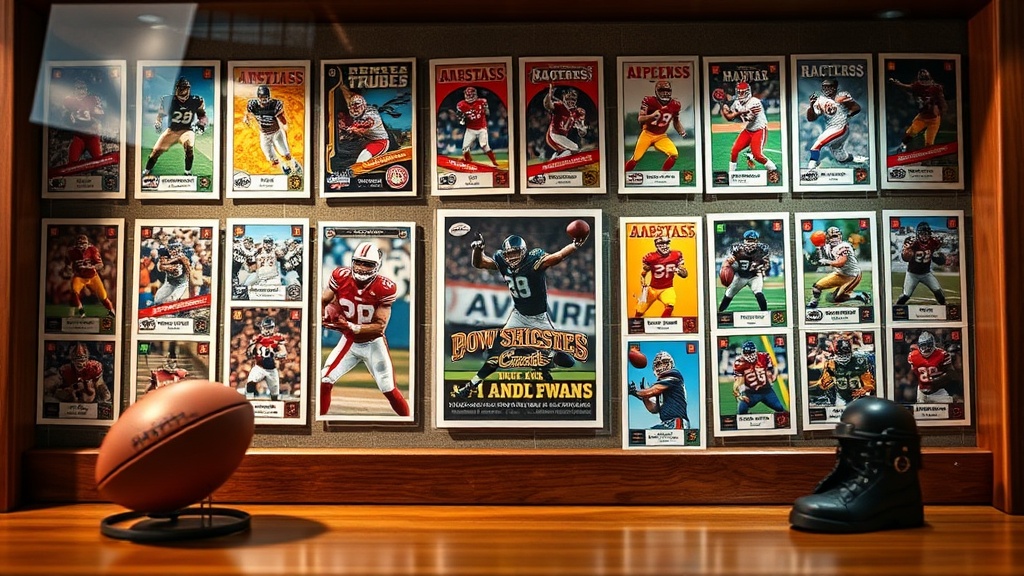
How to Display Your Football Card Collection Without Damaging the Cards

Displaying a football card collection transforms static cardboard into a visual centerpiece—but the wrong approach turns that showcase into a damage report. This post covers the proven methods for putting cards on display while protecting corners, surfaces, and long-term value. Whether showcasing a prized Tom Brady rookie or a complete 1986 Topps set, these techniques keep cards pristine while letting others admire the collection.
What's the Best Way to Display Football Cards Without Risking Damage?
The safest display method combines proper card protection with environmental control. Start with the card holder, then build the display around it.
Raw cards—those without grading—need immediate protection before hitting any display case. Penny sleeves (soft polypropylene sleeves) serve as the first barrier against surface scratches. Slide the sleeved card into a toploader, a rigid plastic holder that prevents bending and corner damage. For premium cards, magnetic one-touch holders from Ultra-PRO or BCW offer crystal-clear display with UV protection and gold magnet seals that won't pop open accidentally.
Graded cards—those encased by PSA, BGS, or SGC—already have built-in protection. The hard plastic slabs withstand most display scenarios, though direct sunlight still poses threats.
Here's the thing about display cases: not all are created equal. Acrylic cases designed specifically for trading cards (like those from BCW Supplies) feature UV-filtering properties and proper spacing that prevents cards from sliding. Avoid standard picture frames—their cardboard backing traps moisture, and the compression damages card corners over time.
For wall displays, consider shadow boxes with depth. Cards mounted in magnetic holders fit perfectly into 1-inch deep shadow boxes, creating a museum-quality presentation while keeping dust and fingers away.
How Do Light and Humidity Affect Displayed Football Cards?
Direct sunlight fades cards within months, and humidity above 60% invites mold and warping. Controlling these environmental factors matters more than the display case itself.
UV light breaks down card stock and bleaches colors. That Joe Montana rookie with the bright red 49ers uniform? Leave it in direct sun and watch it turn pink. Even indirect daylight causes gradual fading over years. The solution isn't complicated—position displays away from windows, or use UV-filtering acrylic cases (look for "99% UV protection" on the label).
LED lighting provides the safest illumination for displayed collections. Unlike halogen or incandescent bulbs, LEDs emit minimal heat and zero UV radiation. Strip lighting inside display cases works beautifully, but keep bulbs at least six inches from card surfaces. Heat buildup— even from LEDs—accelerates card deterioration.
Humidity control separates casual collectors from serious preservationists. Football cards contain organic materials—paper stock and gum residue (on older cards)—that expand and contract with moisture changes. Calgary's dry climate helps collectors there, but anyone in humid regions needs active countermeasures.
Desiccant packs (silica gel) inside display cases absorb excess moisture. Replace or recharge them every 3-6 months—write the date on the pack with a Sharpie. For high-value collections, mini dehumidifiers in display rooms maintain consistent 45-55% relative humidity. Hygrometers (humidity monitors) cost under $15 and prevent nasty surprises.
Temperature swings cause similar problems. Attics and garages? Terrible choices. Basements? Only if dehumidified. Stable room temperature—around 68-72°F—keeps cards flat and happy.
What Are the Best Display Options for Different Collection Sizes?
Collection size determines the optimal display strategy. A dozen PC (personal collection) cards need different solutions than 500-card complete sets.
Small Collections (1-50 cards):
Magnetic one-touch holders on small easels create desktop galleries. BCW's acrylic card stands run about $3 each and angle cards for easy viewing. For wall mounting, individual slab mounts (designed for graded cards) screw into walls and hold cards like tiny paintings.
Medium Collections (50-200 cards):
Card sorting trays with lids double as display pieces. The Ultimate Guard Arkhive stores 480+ cards horizontally but looks sharp on a shelf. For active display, consider card ladder displays—angled rows that show 20-30 cards at once while keeping each one protected in toploaders.
Large Collections (200+ cards):
Full-set displays require different thinking. Custom-built display cases with multiple rows work, but they're expensive. A practical alternative: rotate displayed cards quarterly, keeping the bulk in storage boxes and showcasing 50-100 favorites at a time. This approach keeps the collection fresh and minimizes exposure risks.
| Display Type | Best For | Card Protection Level | Estimated Cost |
|---|---|---|---|
| Magnetic one-touch with stand | Single premium cards | Excellent (UV + rigid) | $8-15 per card |
| Graded card wall mount | PSA/BGS slabs | Excellent (sealed case) | $5-12 per mount |
| Acrylic display case (small) | 10-20 card showcases | Good (requires sleeves) | $40-80 |
| Shadow box with pins | Themed displays (team sets) | Moderate (mounting risks) | $25-60 |
| Card ladder/stand | Rotating displays | Good (requires toploaders) | $30-50 |
| UV-filter frame with mat | Large cards or photos | Moderate (pressure concerns) | $20-40 |
Worth noting: the shadow box approach requires careful mounting. Never pin through cards (obviously). Instead, create custom inserts from acid-free foam board that cradle cards in their holders. The pins go into the foam, not near the cards.
Should You Display Raw Cards or Get Them Graded First?
Grading adds protection and authenticity verification—but it's not mandatory for display, and the cost only makes sense for valuable cards.
Raw display works fine with proper holders. A $15 Patrick Mahomes second-year card in a magnetic one-touch looks identical on display to a $150 graded version. The difference? Peace of mind and resale value. Graded cards have verified authenticity and condition, important if the display lives in a shared space where others handle the cards.
The catch? Grading costs money—$20-50 per card depending on the service and turnaround time. For modern base cards worth $1-5, grading costs more than the card's value. Reserve grading for:
- Rookie cards of star players (Burrow, Herbert, Mahomes)
- Vintage cards pre-1980
- Numbered parallels or autos
- Any card valued over $100
For everything else, raw display with quality holders provides sufficient protection. Just accept that ungraded cards carry condition risk—every time someone leans in for a closer look, accidents can happen.
How Do You Keep Displayed Cards Clean and Dust-Free?
Regular maintenance prevents the slow accumulation of dust and oils that degrades card appearance over time.
Enclosed display cases eliminate most dust problems. Open displays—card ladders, stands on shelves—need weekly attention. A soft microfiber cloth (the kind used for eyeglasses) gently removes dust from card holders. Never use cleaning sprays, paper towels, or compressed air near cards. The force from canned air can knock cards off displays, and chemical residues damage surfaces.
For the cards themselves (inside holders), avoid the temptation to remove them for "cleaning." If a speck of dust gets inside a toploader or magnetic case, the card usually stays protected anyway. Opening the holder to remove that speck introduces more risk than the speck itself.
Handle displayed cards by their edges—even when they're in holders. Oils from fingers transfer to holders, then to cards during removal. Some collectors wear cotton gloves when rearranging displays. That might seem excessive, but it's standard practice at card shows for a reason.
Rotation schedules help too. Every three months, swap displayed cards with stored ones. This practice reduces light exposure for individual cards and gives opportunities to inspect for any emerging issues—new scratches on holders, loosening magnets, or (heaven forbid) card movement inside cases.
That said, don't let fear of damage turn a collection into a bank vault. Cards are meant to be enjoyed. The techniques here—proper holders, environmental awareness, smart positioning—balance display beauty with preservation. A Tom Brady rookie in a $10 magnetic holder on a shelf away from windows will look spectacular in ten years. The same card thumbed through weekly and left on a sunny coffee table? Not so much.
The best display respects both the cards and the collector's desire to enjoy them. Build the setup right once, and the collection becomes a conversation piece that outlasts the Sunday afternoon it took to arrange.