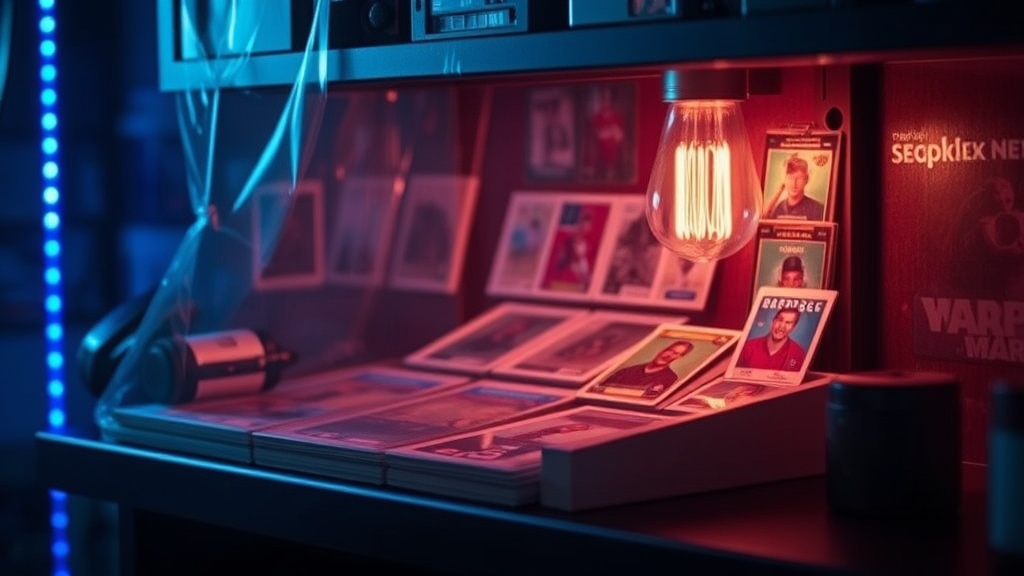
Protecting Your High-Value Football Card Collection from Humidity and Heat

Picture this: you finally track down that elusive 1986 Fleer Joe Montana rookie card or a high-grade modern Patrick Mahomes Prizm. You place it in a sleek, magnetic one-touch holder, feeling like you've reached the pinnacle of your collecting goals. A week later, you pull it out and notice a slight, unsettling bend in the corner or a cloudy sheen on the surface. This isn't just bad luck; it's the result of environmental damage that can strip away a card's value in a matter of months. Protecting your investment requires more than just a drawer and a box—it requires an understanding of how air and temperature interact with cardboard and plastic.
The way we store our football cards often dictates their long-term worth. If you live in a humid area like the coast or a dry climate like Calgary, your needs will differ, but the principles of preservation stay the same. A single bad season of storage can turn a gem mint card into a damaged piece that won't pass a grading standard. We're looking at the actual physical variables that destroy cardboard, not just the aesthetics of a collection.
How does humidity affect football cards?
Humidity is the silent enemy of the serious collector. When moisture levels in the air rise, the cardboard fibers inside your cards absorb that water. This leads to several issues, most notably "warping" or "bowing." A card that was once perfectly flat can become wavy, making it nearly impossible to grade highly. Even if the card stays flat, high humidity can cause the ink to bleed or the surfaces to become tacky, especially with modern chrome-style cards.
To combat this, many collectors use silica gel packets. These little packets are designed to absorb moisture from the air. While they work well in small, airtight containers, they aren't a permanent fix if your storage area is constantly damp. You'll need to replace them or reactivate them frequently. If you're serious about your stash, consider using a dedicated dehumidifier in your storage room. It's a small price to pay to prevent a massive loss in value. You can find detailed information on material stability through the Cricket archives or similar preservation studies, though most collectors rely on empirical evidence from the hobby itself.
The Dangers of Temperature Fluctuations
Temperature isn't just about heat; it's about the change itself. If you store your cards in an attic or a garage, you're asking for trouble. The way materials expand and contract with temperature changes can cause the layers of a card to separate. This is particularly common with high-end cards that have multiple layers of foil or metallic-infused stock. When the temperature swings from a hot afternoon to a cold night, the card's internal structure experiences stress.
It's also worth noting that heat can soften the plastic of penny sleeves and top loaders. If a room gets too hot, the plastic can actually bond to the surface of the card, leaving permanent marks or even a film that can't be removed. Always keep your collection in a climate-controlled environment—a bookshelf in a living room is far better than a box in a basement. If you want to track professional grading standards for temperature-related damage, check the PSA website to see how high-grade cards are handled in professional facilities.
What is the best way to store football cards?
There isn't one single "perfect" method, but a layered approach works best. Most collectors follow a hierarchy of protection:
- Level 1: Penny Sleeves. This is your first line of defense. A soft, thin sleeve prevents surface scratches and keeps dust away.
- Level 2: Top Loaders or Card Savers. These provide rigid protection against bending and physical pressure.
- Level 3: Magnetic One-Touches. These are for your absolute crown jewels. They offer the most rigidity and look great on a shelf, but they are heavy and can actually be more susceptible to certain types of pressure if stacked incorrectly.
- Level 4: Airtight Binders or Boxes. For bulk storage, using airtight bins can help create a micro-environment that shields your cards from the room's ambient air.
Avoid using cheap, generic plastic-ware that doesn't explicitly state it is PVC-free. PVC (polyvinyl chloride) can off-gas over time, creating a chemical film that ruins the surface of your football cards. It's a common mistake that even seasoned collectors make when they're trying to save a few dollars on supplies.
Creating a Controlled Environment
If you have a high-value collection, you might want to move beyond simple boxes. Some collectors use airtight, waterproof cases for long-term storage. This is a great way to ensure that even if a pipe leaks or a basement floods, your cards remain untouched. However, even in an airtight container, you must ensure there is no moisture trapped inside before you seal it, or you'll effectively be baking the card in a humid chamber.
When you're organizing, try not to stack heavy boxes of cards on top of one another. The weight alone can cause the cards at the bottom to warp over several years. Instead, store your boxes vertically, much like how books are kept on a shelf. This distributes the pressure more evenly and reduces the chance of a crushed collection. It's a small adjustment that can save you thousands of dollars in the long run.
Can light damage football cards?
Yes, it certainly can. UV rays are incredibly destructive to the pigments used in modern trading cards. If you display your cards in a glass case, ensure that the case is not in direct sunlight. Even indirect sunlight through a window can cause the colors to fade over time. A vibrant, colorful rookie card can turn dull and washed out if left under a bright lamp or in a sunny room for too long.
<This is especially true for the high-gloss surfaces found in modern sets. The light can actually accelerate the degradation of the plastic layers, leading to a yellowing effect. If you're a collector who loves to display their cards, consider using UV-protected acrylic cases or keeping your display away from windows. It's a simple way to ensure that your cards look just as good in ten years as they do today.